RUSSEMBLAGE 2007 - 2009 | AUSWAHL
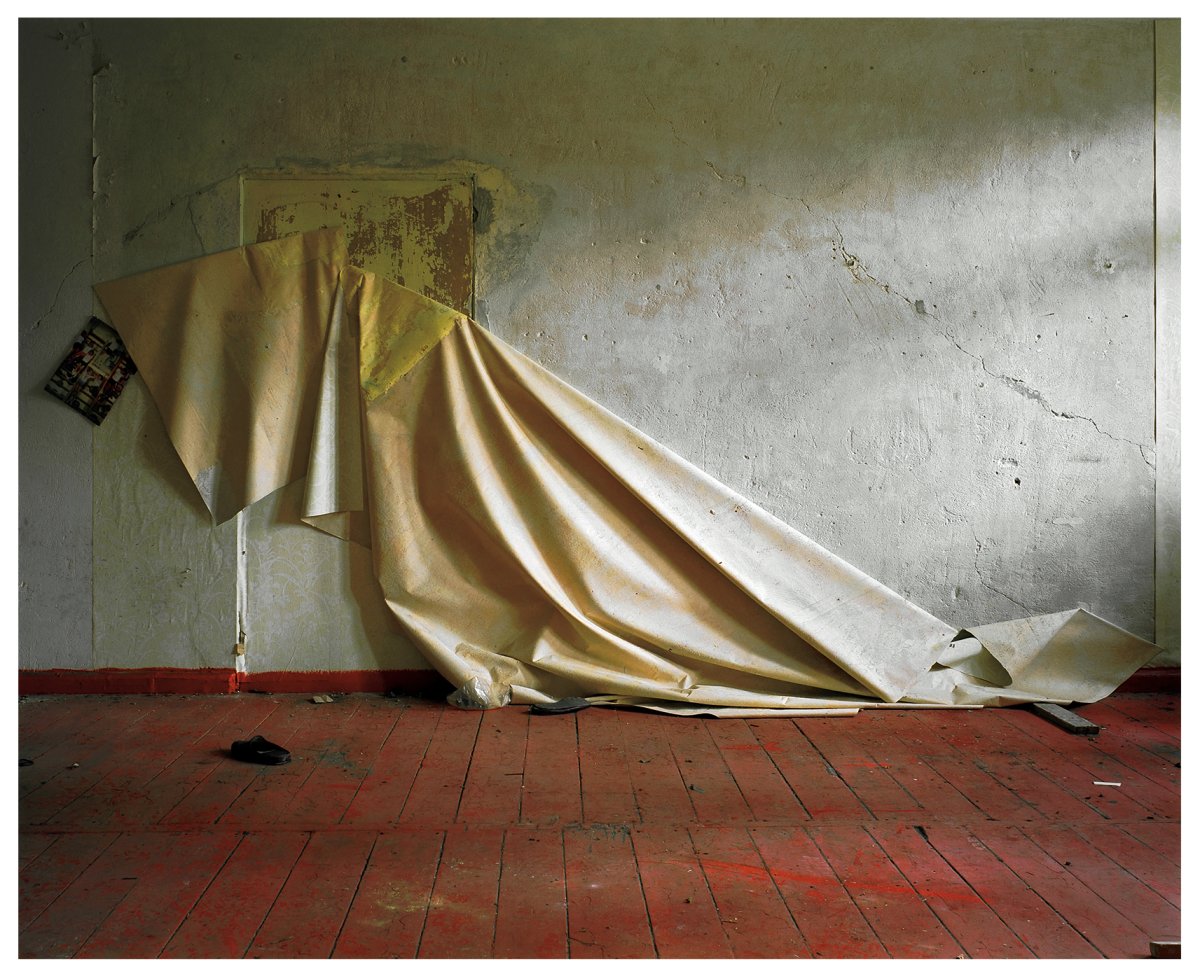
Die Aufgabe eines Ortes, wie auch ganzer Gebiete, kann auf grundlegende Veränderungen hinweisen.
Der Rückzug der Sowjetischen Armee aus der ehemaligen DDR, als ihr Gebiet Teil der BRD wurde, dokumentiert eine derart tiefgreifende Entwicklung, die Nachwirkungen hat.
Was durch die Aufgabe des Ortes seinen Wert verliert, bleibt an ihm zurück. Es wird Abfall, der die verlassene Stelle kennzeichnet, Müll, dessen Räumung sich anbahnt, Schutt, der vielleicht noch liegen bleibt.
Zahlreiche, oft schwer zugängliche Liegenschaften, die von der Sowjetischen Armee unterhalten, wenn nicht errichtet, Jahrzehnte später aufgegeben wurden, warten, verfallend, auf neue Verwendungen. Ihre Erscheinung, in der die Spuren einer schalen Vergangenheit in die offene Zukunft weisen, sind dokumentarischer Ausgangspunkt einer photographischen Arbeit, die Heiko Krause unter dem Titel "russemblage" zusammenfasst.
Sein photographischer Blick besichtigt, was sich im Fortgang der Geschichte überlebt - Überreste, so wertlos, wie ihre Beseitigung teuer ist. Das militärische Leben, dessen monumental heroischer wie alltäglich naiver Ausdruck noch daran hängt, hat schon kein Gewicht mehr. Aus dieser Leichtigkeit gewinnen die Photographien von Heiko Krause ihren künstlerischen Gestus. Im Bild der Kamera werden am Material, das sich angesammelt hat, sehr sinnlich Gestalten eigenen Charakters offensichtlich. Sie überlagern nichts, sondern zeigen sich im Moment ihrer Ablösung vom historischen Sujet.
Die Strenge, die der Photograph den Kompositionen, die er vorfindet, dennoch verleiht, hat etwas Schwebendes. Es führt mutig ins Unbestimmte hinaus, und lässt den Verfall der Macht vor Ort, so weit es geht, auf sich beruhen.
Hierin liegt die Schönheit dieser Werke. Sie ist Ausdruck einer Bewegung, die weiterführt, aber Vergänglichkeit anerkennt.
Prof. Michael Astroh
L’abandon d’un lieu, tout comme celui de territoires entiers, peut être le signe de transformations fondamentales.
Le retrait de l’Armée soviétique de l’ancienne RDA, lorsque son territoire fut intégré à la République fédérale d’Allemagne, témoigne d’un bouleversement d’une telle ampleur, dont les répercussions se font encore sentir.
Ce qui perd sa valeur avec l’abandon d’un lieu y reste. Cela devient des déchets qui marquent l’endroit déserté, des détritus dont l’enlèvement se prépare, des décombres qui, peut-être, demeureront encore sur place.
De nombreuses emprises, souvent difficiles d’accès, entretenues, sinon construites, par l’Armée soviétique, puis abandonnées des décennies plus tard, attendent, en se dégradant, de nouvelles affectations. Leur aspect, dans lequel les traces d’un passé devenu insipide pointent vers un avenir ouvert, constitue le point de départ documentaire d’un travail photographique que Heiko Krause réunit sous le titre russemblage.
Son regard photographique examine ce que le cours de l’histoire a rendu caduc : des vestiges aussi dépourvus de valeur que leur élimination est coûteuse. La vie militaire, dont l’expression à la fois héroïque et monumentale, mais aussi naïve et quotidienne, demeure encore attachée à ces lieux, a déjà perdu tout son poids. C’est de cette légèreté que les photographies de Heiko Krause tirent leur geste artistique. Dans l’image photographique, les matériaux accumulés révèlent, de manière profondément sensible, des formes dotées d’un caractère propre. Elles ne se superposent à rien, mais se manifestent au moment même où elles se détachent de leur sujet historique.
La rigueur que le photographe confère néanmoins aux compositions qu’il découvre possède quelque chose de suspendu. Elle s’aventure avec audace vers l’indéterminé et laisse, autant que possible, le déclin du pouvoir sur les lieux suivre son cours.
C’est en cela que réside la beauté de ces œuvres. Elle est l’expression d’un mouvement qui se poursuit tout en reconnaissant le caractère éphémère des choses.
Prof. Michael Astroh
The abandonment of a single settlement or whole areas may signal fundamental changes.
The withdrawal of the Soviet Army from the former German Democratic Republic, whose territory then became part of the Federal Republic of Germany, documents such a fundamental change and its aftereffects.
Everything that appears to be unimportant at the time of abandonment will be left behind. There is waste lying around in the deserted area, garbage with the sense of being picked up anytime soon, debris that will remain behind.
Countless hardly accessible properties which have been used (and some also built) and abandoned a few decades later by the Soviet army are waiting, crumbling, to be used again. The existence of such traces of a stale past which point to an open future is the documentary starting point for Heiko Krause’s photographic approach entitled “russemblage”.
His photographic eye witnesses what survives the course of history- leftovers, as invaluable as their disposal would be expensive. Military life, whose monumentally heroic and mundanely naïve label is still attached to all the debris, has long lost its power and importance. It is the treatment of this detachment through which Heiko Krause’s photographs formulate their artistic attitude. Through the lens of the photographer the accumulated material has been transformed to deeply sensual objects, each with its very own character. Nothing is covered or hidden - everything is shown in the moment of its detachment of the historical subject.
The photographer gave a certain visual stringency to the compositions he found, but at the same time his work still has a delicate, floating character. The images guide the viewer boldly into the unknown and leave the decay of power, as far as it goes, to itself. Here lies the beauty of his work. They are the embodiment of a movement which is going on but at the same time acknowledges transience.
Prof. Michael Astroh Translation: Susann Jonneg
Оставление какого-либо места, равно как и целых территорий, может свидетельствовать о коренных переменах.
Вывод Советской армии из бывшей ГДР, территория которой вошла в состав Федеративной Республики Германии, свидетельствует именно о таком глубоком историческом преобразовании, последствия которого ощущаются до сих пор.
То, что с оставлением места утрачивает свою ценность, остаётся там. Оно превращается в отходы, отмечающие покинутое пространство, в мусор, который предстоит убрать, в обломки и строительный хлам, которые, возможно, ещё долго будут лежать на прежнем месте.
Многочисленные объекты, зачастую труднодоступные, которые на протяжении десятилетий находились в ведении Советской армии, а порой были ею и построены, впоследствии оказались заброшенными и теперь, постепенно разрушаясь, ожидают нового назначения. Их облик, в котором следы поблёкшего прошлого указывают в открытое будущее, становится документальной отправной точкой фотографической работы, объединённой Хайко Краузе под названием russemblage.
Его фотографический взгляд исследует то, что изжило себя в ходе истории, — остатки прошлого, столь же лишённые ценности, сколь дорого обходится их устранение. Военная жизнь, чьё монументально-героическое и одновременно наивно-повседневное выражение всё ещё сохраняется в этих местах, уже утратила свою значимость. Именно из этой лёгкости фотографии Хайко Краузе черпают свой художествен-ный жест. В фотографическом изображении накопившийся материаль-ный мир с особой чувственной выразительностью обнаруживает формы, обладающие собственным характером. Они ничего не заслон-яют и ни на что не накладываются, а проявляются в тот самый момент, когда освобождаются от своего исторического содержания.
Строгость, которую фотограф тем не менее придаёт найденным им композициям, обладает чем-то невесомым, словно парящим. Она смело устремляется в неопределённость и, насколько это возможно, позволяет упадку былой власти оставаться на месте, не вмешиваясь в его течение.
В этом заключается красота этих произведений. Она выражает движение, ведущее дальше, но признающее преходящий характер всего существующего.
Проф. Михаэль Астро | Michael Astroh
heiko krause russemblage | BUCH IM BLURB SELBSTVERLAG
Das Buch "russemblage" mit dem Begleittext von Prof. Michael Astroh bildet eine repräsentative Auswahl der Fotografien aus der Serie ab. Die Fotografien sind als analoge Farbaufnahmen mit Hilfe einer Großformatkamera an diversen Orten ehemaliger sowjetischer Militärstädte auf dem Gebiet der vormaligen DDR entstanden. Die Webvorschau des Buches ermöglicht einen Einblick in die Serie. Bitte schauen sie das Buch möglichst in Vollbilddarstellung an.
Le livre russemblage, accompagné d’un texte du professeur Michael Astroh, présente une sélection représentative des photographies de la série. Ces photographies ont été réalisées en couleur, sur film argentique et à l’aide d’une chambre photographique grand format, dans différents sites d’anciennes cités militaires soviétiques situées sur le territoire de l’ex-RDA.L’aperçu du livre en ligne permet de découvrir la série. Nous vous invitons à consulter le livre de préférence en mode plein écran.
The book russemblage, accompanied by a text by Prof. Michael Astroh, presents a representative selection of photographs from the series. The photographs were taken on analogue colour film using a large-format camera at various sites of former Soviet military towns in the territory of the former GDR.The online preview of the book offers an insight into the series. For the best viewing experience, please view the book in full-screen mode.
Книга russemblage, сопровождаемая текстом профессора Михаэля Астро (Michael Astroh), представляет репрезентативную подборку фотографий из этой серии. Фотографии были сделаны на цветную фотоплёнку с использованием крупноформатной камеры в различных местах бывших советских военных городков на территории бывшей ГДР.Онлайн-просмотр книги позволяет познакомиться с серией. По возможности рекомендуем просматривать книгу в полноэкранном режиме.
Fotobuch wird geladen …
russemblage | 2007–2009
PDF herunterladen
68 Seiten | PDF | 22,3 MB